Vipassana in Dharamkot (Dhamma Sikhara): 10-Day Course Guide
Dhamma Sikhara is the Vipassana centre in the forest near Dharamkot, above McLeod Ganj. It runs silent 10-day courses in the S.N. Goenka tradition, free of charge. Here is how the days run, who it suits, how to apply on dhamma.org and how to arrive.
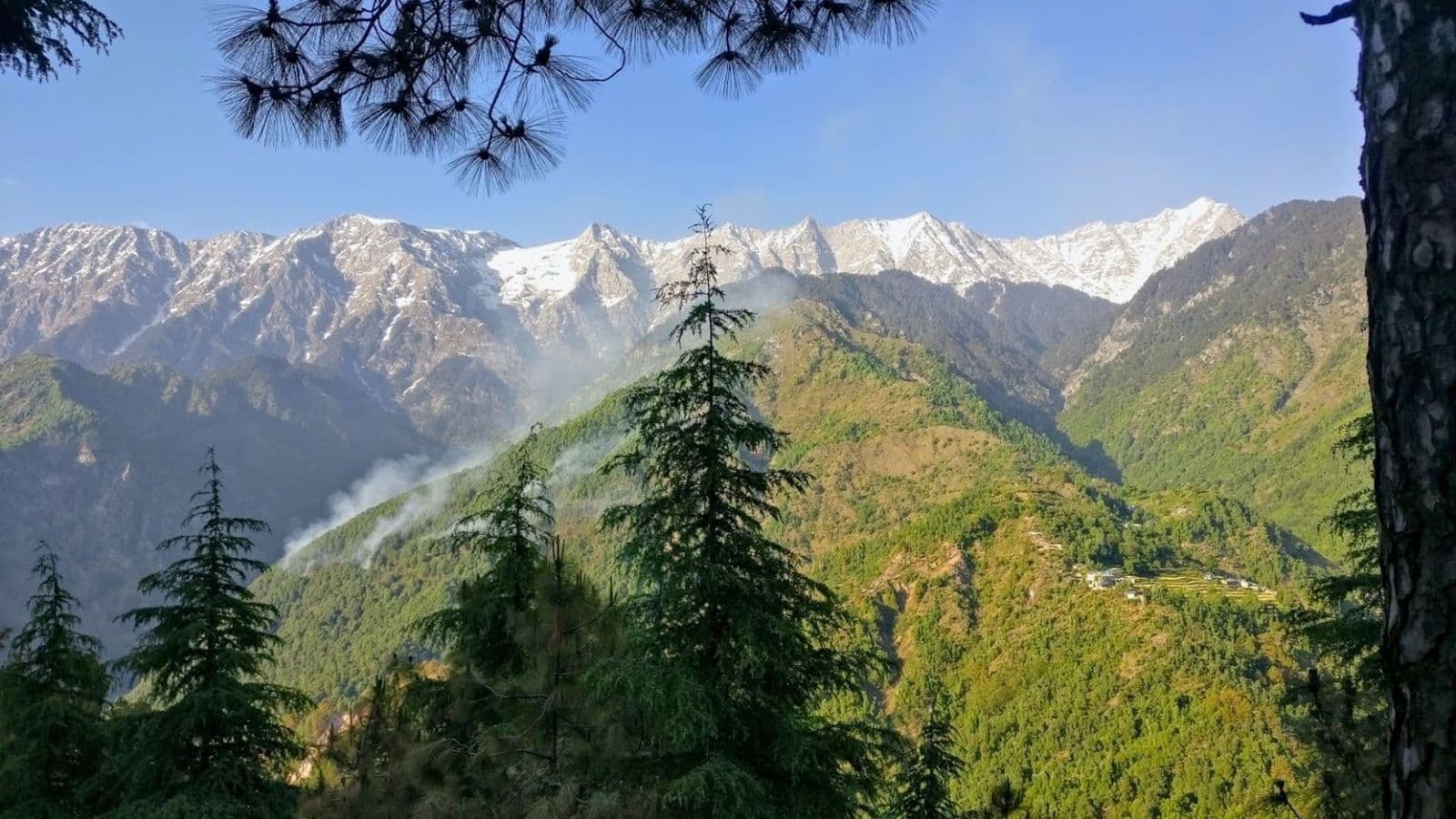
Short answer: Dhamma Sikhara, near Dharamkot above McLeod Ganj, runs 10-day silent Vipassana courses in the S.N. Goenka tradition. There is no charge for teaching, food or a bed; you may donate at the end. Apply online through the Dhamma Sikhara schedule on dhamma.org, usually about two months before the course, as popular autumn courses fill quickly. Courses run from March to December.
Dhamma Sikhara, the Himachal Vipassana Centre, is the Vipassana meditation centre in the forest near Dharamkot village, above McLeod Ganj in Dharamshala. It runs 10-day silent residential courses in the S.N. Goenka tradition, the same courses taught at centres worldwide through dhamma.org. There is no charge for teaching, food or a bed: everything is paid for by donations from people who have already done a course, and you may give at the end if you wish. You apply online through the centre's schedule on dhamma.org, usually about two months before the course starts, and popular autumn courses fill quickly.
If you are weighing it up against the other options in town, our meditation and yoga retreats guide and the monasteries and meditation page put everything side by side. This guide is only about the Vipassana course.
Quick Facts
| Centre | Dhamma Sikhara (Himachal Vipassana Centre) |
| Location | Near Dharamkot, above McLeod Ganj, at about 2,000 m in the Dhauladhar range |
| From McLeod Ganj | Taxi or auto-rickshaw, or a steep uphill walk of about 1.5 km from the main square |
| Tradition | Vipassana as taught by S.N. Goenka |
| Course length | 10 full days; 12 calendar days including arrival and departure |
| Usual dates | Ten-day courses on the 1st to 12th and 15th to 26th of the month |
| Season | Courses from March to December; no courses listed in January and February |
| Cost | Free, including food and accommodation; voluntary donation at the end |
| Language | Hindi and English, unless a course is marked otherwise |
| How to apply | Online form through the Dhamma Sikhara schedule on dhamma.org |
| Registration | Day 0, between 2pm and 4pm, followed by orientation |
| Course ends | Morning of the final day, by about 7:30am |
What the 10 Days Are Like
The course is simple in shape and hard in practice. You arrive on day 0, register, hand in your phone and valuables, eat a light meal, attend an orientation and then enter Noble Silence. For the next ten days you follow the same timetable.
The daily timetable
The standard Goenka schedule, used at Dhamma Sikhara as at every centre, looks like this:
| Time | What happens |
|---|---|
| 4:00am | Wake-up bell |
| 4:30–6:30am | Meditation in the hall or your room |
| 6:30–8:00am | Breakfast and rest |
| 8:00–9:00am | Group sitting in the hall |
| 9:00–11:00am | Meditation as the teacher directs |
| 11:00am–12:00pm | Lunch |
| 12:00–1:00pm | Rest; time to see the teacher |
| 1:00–5:00pm | Meditation, with a group sitting from 2:30 to 3:30pm |
| 5:00–6:00pm | Tea break |
| 6:00–7:00pm | Group sitting |
| 7:00–8:15pm | Recorded evening discourse by S.N. Goenka |
| 8:15–9:00pm | Group sitting |
| 9:00–9:30pm | Questions in the hall |
| 9:30pm | Lights out |
That is roughly ten hours of sitting a day. The first three days are spent on the breath (Anapana); Vipassana proper is taught from day four. The evening discourses explain the technique and are the closest thing to entertainment you will get. Most people find days two and six the hardest. Knees and backs complain, the mind races, and the urge to leave can be strong. That is normal, and the teachers have heard it many times.
Noble Silence and the rules
Everyone agrees to the code of discipline before arriving. The main points:
- Noble Silence: no talking, gestures, eye contact or written notes with other students, from the start of the course until the morning of the last full day. You can speak to the teacher about the practice and to the course management about practical problems.
- No phones, devices, reading or writing. Phones, smartwatches and other devices are deposited at registration. No books, journals, note-taking, music or news.
- Five precepts: no killing, no stealing, no sexual activity (celibacy for the whole course), no lying and no intoxicants of any kind, including alcohol and drugs.
- Men and women are kept completely separate, with separate living areas and seating. Couples, friends and family members do not contact each other during the course.
- No other practices. Yoga routines, exercise programmes, prayer beads, mantras, crystals and other spiritual practices are set aside for the ten days. Walking in the designated areas during breaks is allowed.
- Modest clothing. No shorts, short skirts, tight leggings or sleeveless tops.
- Stay inside the course boundaries for the whole time.
Food
Meals are simple vegetarian food cooked on site, served at breakfast and lunch. At the 5pm tea break, new students get tea with milk and some fruit; returning students take only lemon water or plain tea. Fasting is not allowed. If you need a special diet for a medical reason, say so on the application form. Do not bring your own food.
Who It Suits, and Who Should Not Go
Vipassana suits people who want a serious, structured meditation retreat and are prepared to sit through discomfort and boredom without escape. You do not need any experience, and you do not need to be Buddhist: the course is taught as a practical technique, and people of every faith and none take it.
It is not a holiday, a wellness break or a gentle introduction. Think twice if:
- You have a history of significant mental health conditions. The official guidance says courses are not recommended for people with a history of serious mental illness, and that old symptoms can resurface during or after the course even when someone is stable now. The application asks about your mental and physical health and any medication. Answer fully and honestly; the centre may ask follow-up questions or advise against attending.
- You are dealing with acute depression, anxiety, panic or trauma. The organisation is clear that Vipassana is not therapy and not a replacement for medical or psychiatric care.
- You have a physical condition that makes long sitting or cold mornings difficult. Email the centre before applying.
- You cannot commit to all twelve days. If you might need to leave for a flight, a job or a friend, pick another date.
If you only want a taste of meditation, the drop-in sessions at Tushita are a better first step (see below).
How to Apply on dhamma.org
- Find the schedule. Go to dhamma.org, search for Dhamma Sikhara (listed under Himachal Pradesh, India) and open its course schedule. You can also reach it through sikhara.dhamma.org.
- Check when applications open. Each course shows an opening date. For ten-day courses this has been about two months ahead: a course starting on the 15th of a month opens to applications on the 15th two months earlier. Applications open at midnight Indian time on that date.
- Read the code of discipline and the introduction before filling in the form. The form asks you to confirm you have read them.
- Apply online as soon as your course opens. Courses list separate places for men and women, and for new and old students, so one may be full while another is still open.
- Wait for a reply. The centre says it can take up to two weeks to hear back. Check your spam folder.
- Confirm. If you are accepted, you must confirm that you are coming to secure your place. If you do not confirm, the place can go to someone else.
- If the course is full, you can join the waiting list. People do drop out, but plan a backup date or another centre rather than counting on it.
Autumn fills early. October and November are the clearest, most comfortable months in Dharamshala, and the ten-day courses then are often full for new students soon after they open. If you are set on autumn, put the opening date in your calendar. Spring and early summer courses are usually easier to get.
Season and Closures
The schedule follows the weather. Ten-day courses run on the 1st to 12th and 15th to 26th of each month through the warmer part of the year. December usually brings shorter or specialised courses for old students, and the published schedule shows no courses in January and February, when this part of the hill is at its coldest. The first course of the year is in early March; for 2027 that first course is a Satipatthana course for old students, and the first new-student ten-day course is in mid-March.
What each season feels like at about 2,000 m:
- March to May: cool mornings, warm days, mostly dry. A good time to apply.
- June to September: monsoon rain, leeches on forest paths, damp clothes. Courses still run.
- October and November: clear, cold nights, the most popular courses.
- December: cold, with old-student courses only.
Always check the live schedule for the exact dates and the status of your course; it changes year to year.
Arriving: Day 0
Registration runs from 2pm to 4pm on day 0, followed by orientation and the first sitting. Aim to reach Dharamkot by early afternoon rather than coming straight from an overnight bus, because the first evening already starts the routine.
Getting there. The centre is near Dharamkot village, above McLeod Ganj. From McLeod Ganj main square you can take a taxi or auto-rickshaw up the Dharamkot road, or walk: about 1.5 km, steep and uphill all the way. From Dharamshala town or the bus stand, take a taxi to McLeod Ganj first. Our Dharamkot travel guide covers the road and the footpaths.
Luggage. Walking up with a big rucksack is hard work at this altitude. Take a taxi if you have more than a day pack, and pack light: you will wear the same few outfits for ten days. Leave anything you do not need at your guesthouse, since you will want somewhere to stay afterwards anyway.
What to bring:
- Loose, modest clothes for sitting, enough for ten days (there is limited time for washing)
- Warm layers, a shawl or blanket for the hall, warm socks, especially from October onward
- A rain jacket in the monsoon
- Slip-on shoes, which are easy to take off at the hall
- A torch, a water bottle and simple toiletries
- Any medication you have declared on your form
- An unlocked phone you are happy to hand in, and a printed or written copy of your confirmation
Leave behind: books, journals, laptops, rosaries and crystals, snacks, and anything you would be tempted to use.
The course ends on the morning of the final day, by about 7:30am, after a closing talk and breakfast. You walk out early in the day, often a little dazed, so book a bed for that night.
Where to Stay Before and After
Most students spend at least one night in the area before day 0 and another after the course. Dharamkot is the obvious base: quiet, close to the centre, and full of small guesthouses and cafes. See our Dharamkot destination page for the village itself.
If you are on a budget or travelling alone, hostels in Dharamkot and McLeod Ganj are a good fit for a night or two; browse them on our hostels page. If you want a choice of areas, our where to stay in Dharamshala guide compares McLeod Ganj, Dharamkot, Bhagsu and the lower town.
Vipassana or Tushita?
Tushita Meditation Centre, also in Dharamkot, teaches meditation within Tibetan Buddhism. Its ten-day Introduction to Buddhism course includes teachings on Buddhist philosophy, guided meditations and discussion, with silence but a gentler pace than Vipassana. It also offers hour-long drop-in meditations and short courses, which makes it a better place to start if you are new or unsure. Dhamma Sikhara is stricter, silent throughout, and focused on a single technique rather than on Buddhist teaching. Our Tushita guide covers its courses and how to book.
Before You Apply
Read the code of discipline in full, check the live schedule, be honest on the health questions, and keep twelve clear days. If you do that, the practical side is simple: one form, one confirmation email and a walk up the hill.
Frequently Asked Questions
Is Vipassana at Dharamkot free?
How far ahead should I apply for Dhamma Sikhara?
Can I leave the Vipassana course early?
Is the course taught in English?
What should I bring to Dhamma Sikhara?
Are there Vipassana courses in January and February?
When do I need to arrive?
Is Vipassana suitable if I have a mental health condition?
More answers on our Dharamshala travel Q&A page.
Where to stay: see our picks of the best hotels in Dharamshala and the best hotels in McLeod Ganj, or compare all hotels and homestays with direct rates.
Need Help Planning Your Dharamshala Trip?
Our local team can help with hotels, treks, taxis, and custom itineraries.
Sources
Checked 2026-10-16. Facts change; confirm on the official pages before you travel.
Related Guides
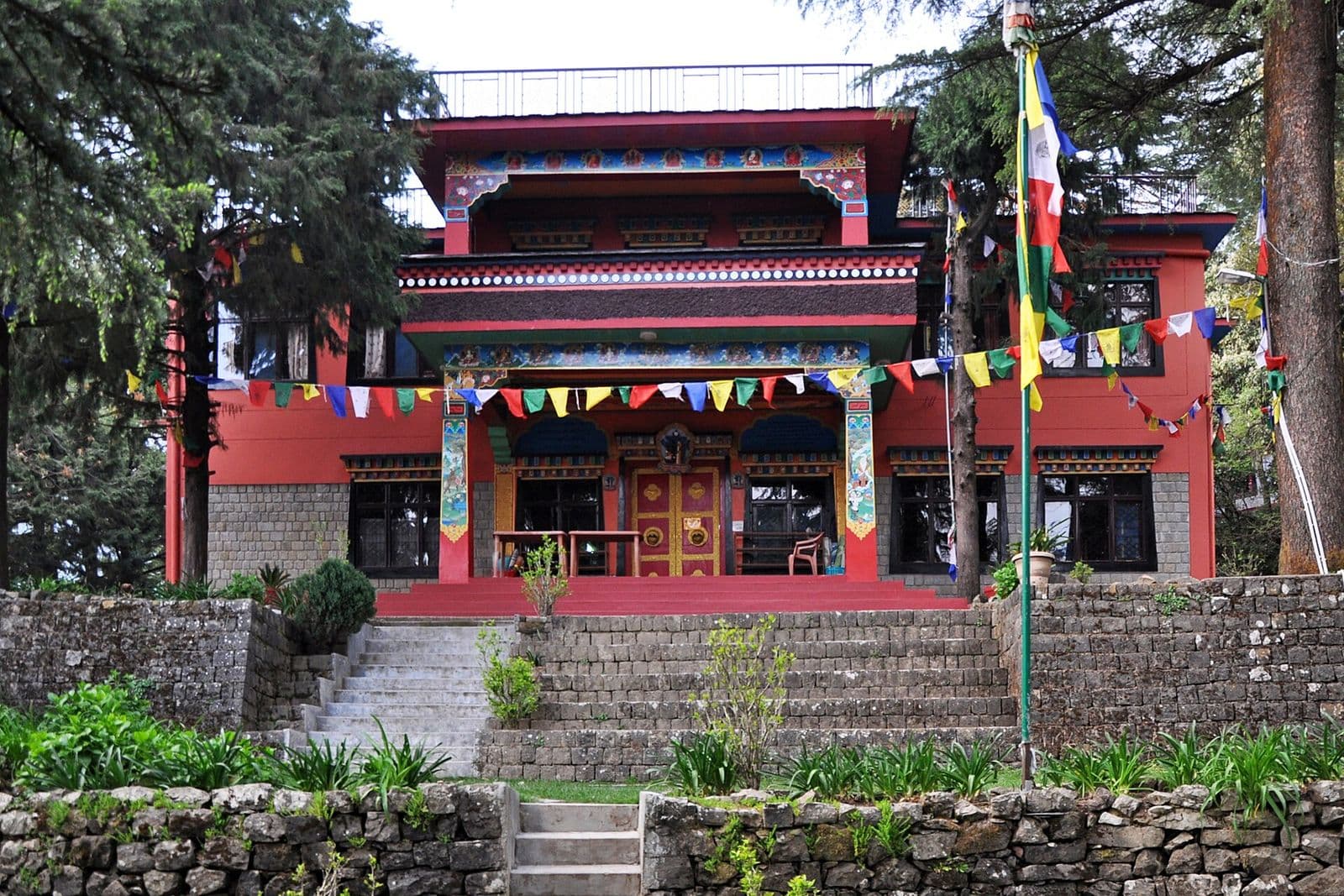
Meditation & Yoga Retreats in Dharamshala: Tushita, Vipassana, LTWA & More (2026)
An honest guide to meditation, Buddhist study and yoga in Dharamshala and McLeod Ganj: Tushita's courses, the 10-day Vipassana at Dhamma Sikhara, LTWA philosophy classes, yoga in Dharamkot and Bhagsu, costs, seasons and how to choose.
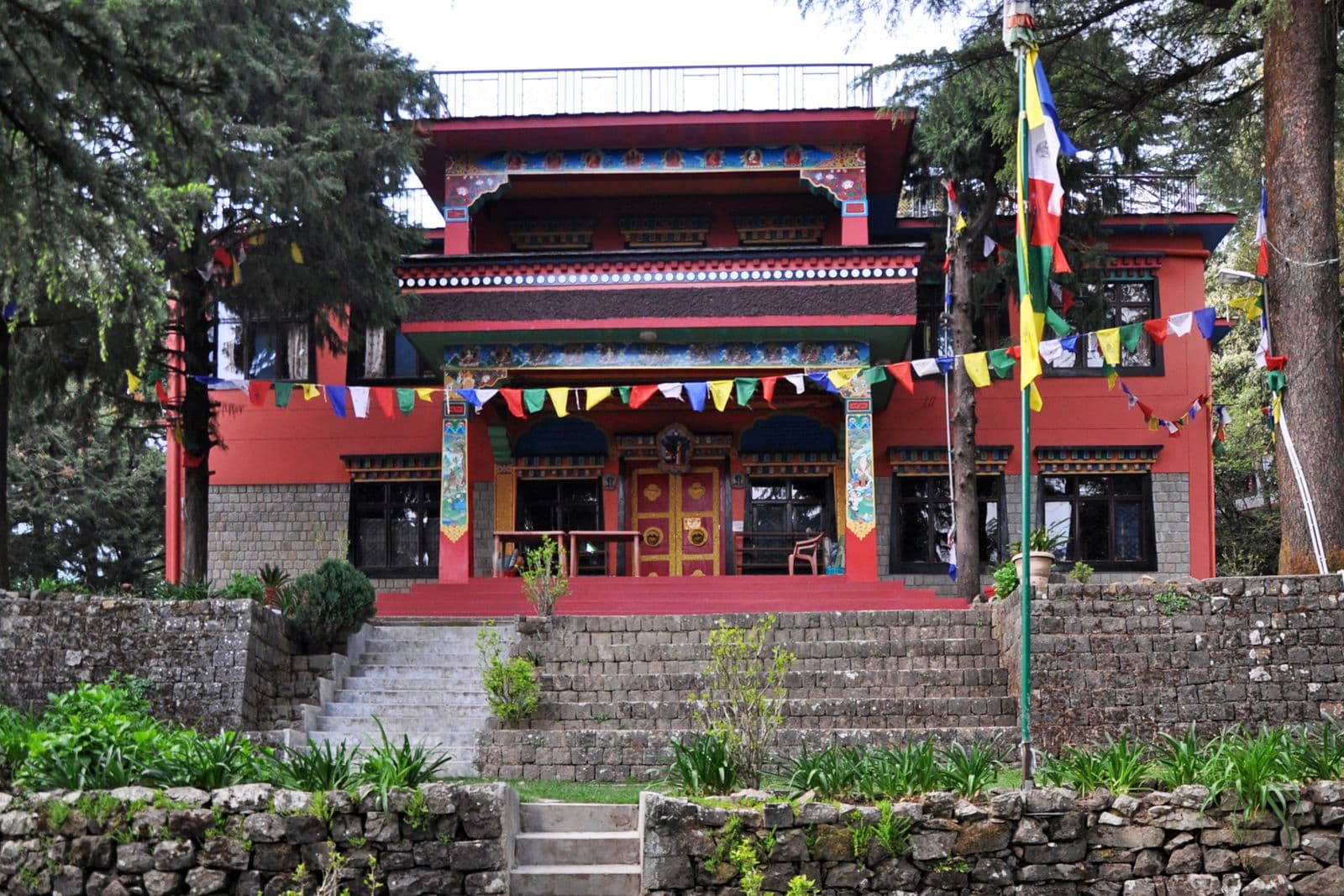
Tushita Meditation Centre, Dharamkot: Courses & How to Book
Tushita is a Tibetan Buddhist centre in the forest above McLeod Ganj. Here is how its free drop-in meditation works, what the 10-day Introduction to Buddhism course is like, how to book each course, what it costs and where to stay.
Things to Do in Dharamkot: Tushita, Gallu Devi & Trails (2026)
A local's guide to Dharamkot above McLeod Ganj: Upper vs Lower Dharamkot, Tushita and Dhamma Sikhara, the Gallu Devi start of the Triund trek, cafes, hostels, the Israeli backpacker scene and how to find the quiet side.
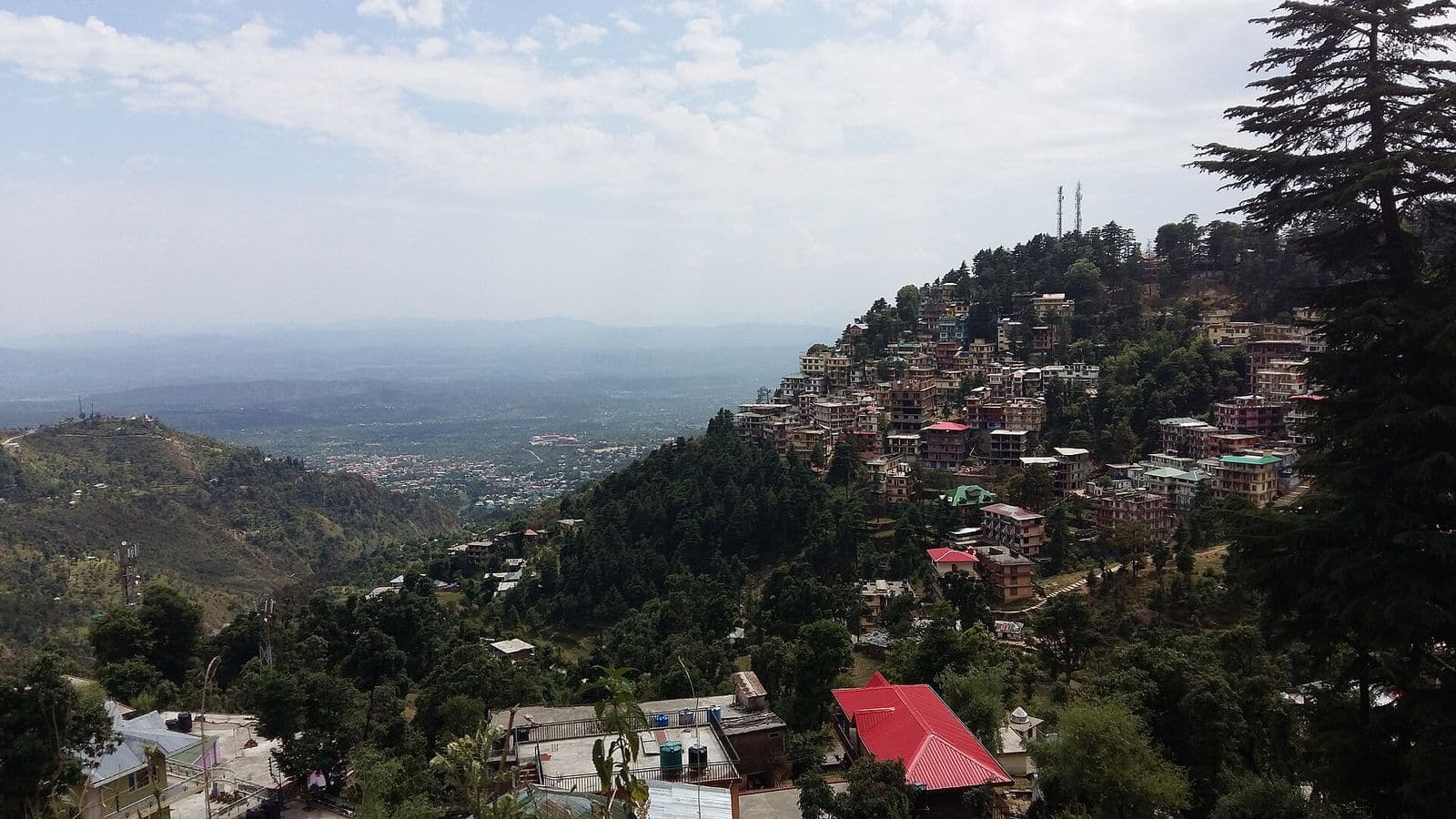
Where to Stay in Dharamshala: 5 Areas Compared (2026)
McLeod Ganj, Bhagsu, Dharamkot, Naddi or lower Dharamshala? A local comparison of the five main bases: walking distance to the Dalai Lama Temple, road access, noise, steps, price level and who each area suits.