Kangra Fort 2026: Timings, Ticket Price, History & How to Reach from Dharamshala
Kangra Fort is the old Katoch stronghold on a ridge above the Manjhi and Banganga rivers, about 20 km from Dharamshala and protected by the ASI. Timings, the ASI ticket, the Maharaja Sansar Chand Museum, what to see inside, a dated history from Mahmud of Ghazni to the 1905 earthquake, and how to reach by taxi, bus or toy train.
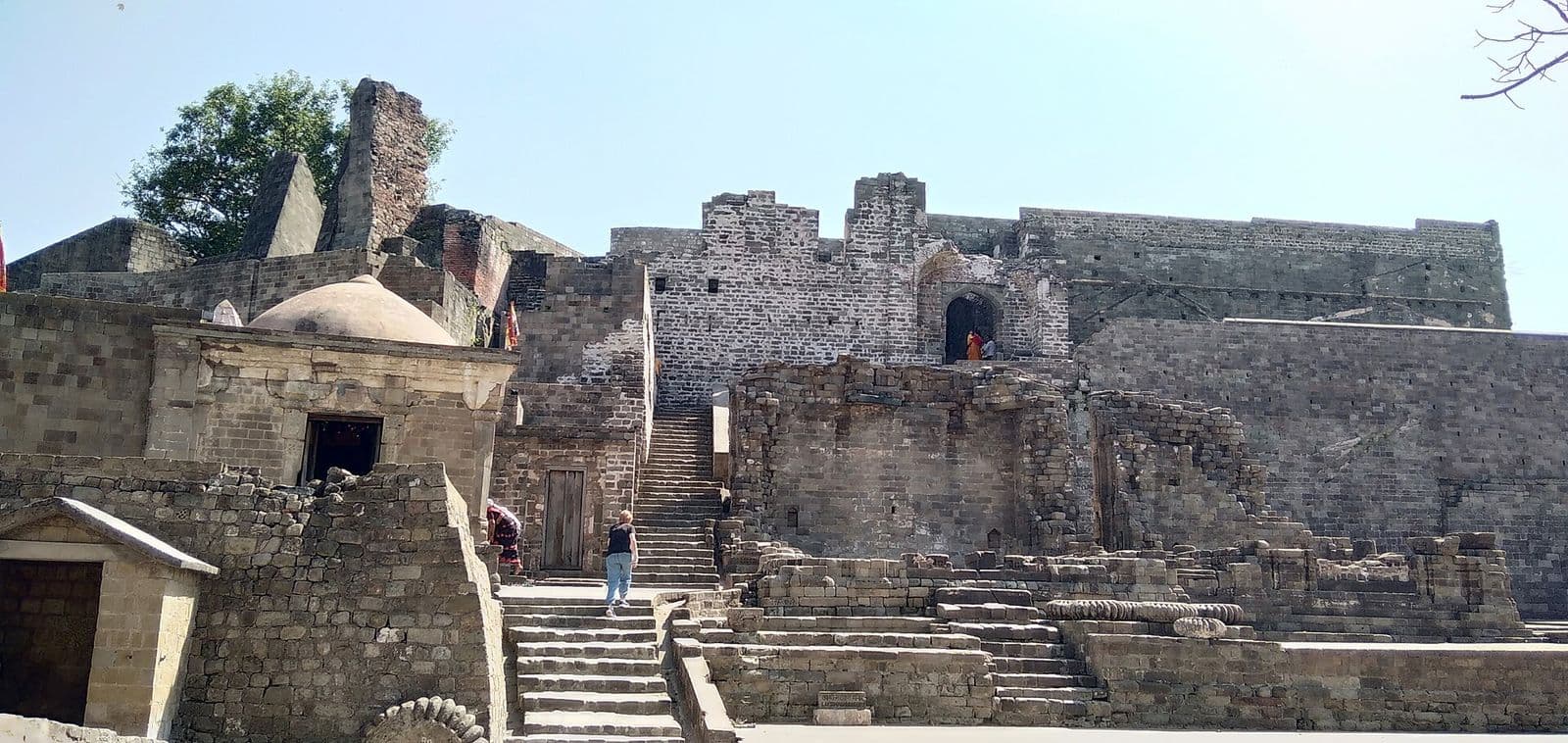
Short answer: Kangra Fort is a ruined hill fort of the Katoch dynasty on the edge of Kangra town, about 20 km from Dharamshala (roughly 45 minutes by taxi) and protected by the Archaeological Survey of India (ASI). The ASI-organised online ticket listing gives the hours as 6 am to 6 pm and tickets from ₹20; the foreigner rate is higher but we could not confirm it officially. Give it 1.5 to 2 hours, add the small Maharaja Sansar Chand Museum next door, and pair it with Brajeshwari Devi temple in Kangra town.
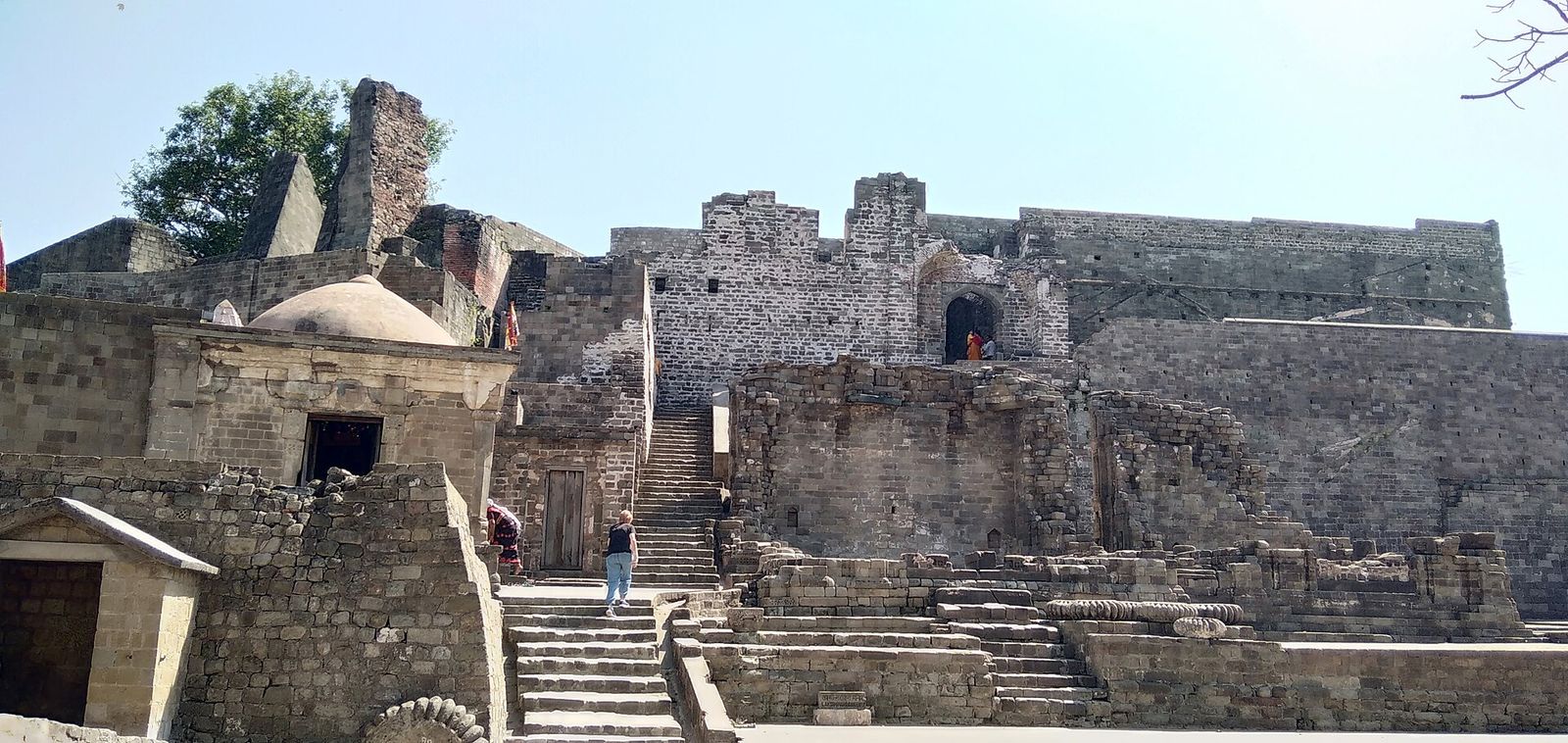
Kangra Fort, also called Nagarkot or Kot Kangra, is one of the great forts of the Himalayan foothills. Its gates climb a narrow ridge between two rivers, with the Dhauladhar range on the skyline. This guide gives the facts we could check on 27 October 2026 and says clearly where official information is missing.
Kangra Fort: quick facts
| Question | Answer | Source / status |
|---|---|---|
| What | Ruined fort of the Katoch rulers of Kangra; ASI protected monument | Kangra district website; Wikipedia |
| Where | Edge of Kangra town, on a hillock between the Manjhi and Banganga rivers. Coordinates 32°05′17″N 76°15′28″E, about 700 m | Wikipedia |
| From Dharamshala (Kotwali Bazaar) | About 20 km, roughly 45 minutes by taxi | Wikipedia; our Kangra guide |
| From McLeod Ganj | About 29 km (add the 9 km road down to Dharamshala), allow about 1 hour 15 minutes | Our Dharamshala facts |
| From Kangra town | About 3 km | Himachal Tourism |
| From Gaggal (Kangra) Airport | About 14 km | Kangra district website |
| Timings | 6 am to 6 pm on the online ticket listing (organiser ASI). Older travel listings give 9 am to 5 or 6 pm | District ticket listing, checked 27 Oct 2026; not on an ASI page we could read |
| Ticket (Indians) | Listed from ₹20 online | District ticket listing |
| Ticket (foreigners) | Higher; ₹300 is widely reported but not confirmed officially | Not confirmed |
| Museum | Maharaja Sansar Chand Museum, beside the fort, run by the Kangra royal family; separate ticket | The Tribune, 21 Nov 2010 |
| Time needed | 1.5 to 2 hours for the fort, about 30 minutes for the museum | Our Kangra guide |
| Best time | October to March; early morning or late afternoon | Our advice |
| Parking and toilets | The ticket listing says free parking and washrooms are available | District ticket listing |
| Nearest railway station | Kangra (KGRA) on the Kangra Valley narrow-gauge line | Kangra district website; our toy train guide |
Where is Kangra Fort and how far is it from Dharamshala?
The fort stands on the southern edge of Kangra town (Old Kangra), on a long rocky spur where the Manjhi and Banganga rivers meet. It is about 20 km below Dharamshala by road and about 3 km from Kangra town and the Brajeshwari Devi temple.
| From | Distance (approx.) | Drive time (approx.) |
|---|---|---|
| Dharamshala (Kotwali Bazaar) | 20 km | 45 minutes |
| McLeod Ganj | 29 km | 1 hour 15 minutes |
| Brajeshwari Devi temple, Kangra | 3 km | 10 to 15 minutes |
| Gaggal (Kangra) Airport | 14 km | 30 minutes |
| Masroor rock-cut temples | 30 to 35 km | 1 to 1.25 hours |
| Jwalamukhi | About 30 km from Kangra | About 1 hour |
Drive times are our estimates for normal traffic. Festival days at the Kangra temples slow the town roads.
What are the Kangra Fort timings and ticket price?
Hours: the online ticket listing, with the ASI as organiser, gives 6 am to 6 pm, entry from 6 am. Several older travel sites give 9 am to 5 pm or 9 am to 6 pm. We could not find the timings on an official ASI page on 27 October 2026, so arrive by 4 pm to have enough light for the climb.
Ticket: the same listing shows tickets from ₹20 and says a ticket is needed for all ages. Older reports mention ₹25 at the counter, and some visitors describe a ₹150 ticket that includes an audio guide. Foreign visitors pay more; ₹300 is the figure most often reported, but we have not seen it on an official page.
How to pay: visitors report buying tickets by scanning a QR code at the counter, so keep mobile data on. If your card or UPI does not work, ask the staff at the gate.
Fees may change. On 8 September 2026 the Ministry of Culture published draft rules revising the list of ticketed ASI monuments. Kangra Fort and the Masrur rock-cut temples are both in Category B of the draft (UNI, 9 September 2026). The new rules take effect only after final notification, and the report gave no fee amounts.
What is the history of Kangra Fort?
The fort was built by the Katoch dynasty, the ruling family of Kangra, who trace their line to the ancient Trigarta kingdom. The Kangra district website calls it the largest fort in the Himalayas and one of the oldest in India; Wikipedia gives its area as 463 acres. Its wealth, and the treasure of the nearby Brajeshwari temple, made it a prize for every power in north India.
| Year | What happened | Source |
|---|---|---|
| 9th to 10th century | Earliest surviving remains: Jain and Hindu temples inside the fort | Wikipedia |
| 1009 | Mahmud of Ghazni raids Kangra, the earliest recorded reference to the fort | Wikipedia |
| 1337 and 1351 | Captured by Muhammad bin Tughluq, then Firuz Shah Tughluq | Wikipedia |
| 1615 to 1620 | Mughal siege; Jahangir’s forces take the fort by 1620, and Jahangir visits in 1621. Mughal rule lasts more than 160 years | Kangra district website; Wikipedia |
| 1783 | The Mughal governor’s son surrenders the fort to the Sikh Kanhaiya Misl | Kangra district website; Wikipedia |
| 1786 | Raja Sansar Chand Katoch regains the fort (Wikipedia gives 1786; the district site gives a slightly different range) | Wikipedia; Kangra district website |
| 1806 to 1809 | Gurkha forces besiege the fort; Sansar Chand turns to Maharaja Ranjit Singh, who takes it on 24 August 1809 | Wikipedia |
| 1846 | The British take the fort after a six-week siege during the First Anglo-Sikh War (surrender 28 May 1846) | Wikipedia |
| 4 April 1905 | The great Kangra earthquake badly damages the fort, which ends its use as a garrison | Wikipedia; Kangra district website |
Raja Sansar Chand (ruled about 1775 to 1823) is the name you will hear most. He was also the great patron of Kangra miniature painting; read our Kangra painting guide for that side of his story.
What can you see inside Kangra Fort?
You enter at the bottom of the ridge and climb through a series of gates to the old palace area at the top. The path is stone, uneven and steep in places.
| Stop | What it is |
|---|---|
| Ranjit Singh Gate | The entrance gate, built in the Sikh period |
| Ahani and Amiri Darwaza | Gates attributed to the Mughal governor Nawab Saif Ali Khan |
| Jehangiri Darwaza | A gate where the passage turns sharply, a classic defensive design |
| Darsani Darwaza | Flanked by worn figures of the river goddesses Ganga and Yamuna |
| Lakshmi Narayan and Ambika Devi shrines | Stone temples along the courtyard past the Darsani Darwaza |
| Jain temple | A Svetambara Jain shrine with a large image of Rishabhanatha, reinstalled in 1978; Jains still worship here |
| Mosque remains | Mughal-era additions on older Katoch foundations |
| The top | Views over the river confluence, Kangra town and, on clear days, the snowy Dhauladhar |
Source for the gates and shrines: Wikipedia (Kangra Fort) and the Kangra district website. Visitors recommend the audio guide sold at the entrance; the ruins have few signs.
Want to see the fort as it once stood? The Kangra Art Museum in Dharamshala has a miniature model of it (Wikipedia).
What is the Maharaja Sansar Chand Museum?
A small museum close to the fort entrance, owned by the royal family of Kangra (the Katoch family). It opened to the public in November 2010 with family belongings: a chart of the Katoch dynasty, crystal and silver ware, clothes, coins and swords (The Tribune, 21 November 2010). In April 2011 the Dalai Lama formally inaugurated it and launched Hindi and Tibetan audio guides; PTI described exhibits including miniature paintings, period clothing, manuscripts and arms (VOA Tibetan, April 2011).
| Detail | Status (27 October 2026) |
|---|---|
| Location | Beside the fort, near the entrance |
| Ticket | Separate from the ASI fort ticket. ₹10 in 2010 plus ₹25 for photography; the current price is not confirmed |
| Hours | Not confirmed; ask at the fort counter |
| Time needed | About 30 minutes |
What is the best time to visit Kangra Fort?
October to March, early morning or late afternoon. At about 700 m the fort is much warmer than McLeod Ganj, which makes it a good winter outing when the upper town is cold. April to June middays are hot on the bare stone. In the monsoon (July to September) the paths get slippery, and landslides can affect Kangra roads; read our monsoon guide before you go.
Light: late afternoon gives warm light on the ramparts and sunset views from the top, as visitors suggest. Clear winter mornings are best for the Dhauladhar.
Accessibility: this is a climb. Wear shoes with grip, carry water, and go only as far as is comfortable if you have knee or breathing problems.
How do I reach Kangra Fort from Dharamshala and McLeod Ganj?
| Mode | How | What to know |
|---|---|---|
| Taxi | Direct from your hotel, about 45 minutes from Dharamshala | Easiest, and lets you add Brajeshwari, Masroor or the devi temples the same day |
| Bus | Local buses run from Dharamshala bus stand to Kangra; then a short auto or taxi ride to the fort | We have not checked a current timetable or fare |
| Toy train | Get off at Kangra (KGRA), the station for the fort; Kangra Mandir, about 3 km further along the line, is for Brajeshwari | Partly running since 11 October 2026; check NTES or 139 before you travel |
| Air | Gaggal (Kangra) Airport is about 14 km away | Good stop on the way to or from a flight |
Taxi from Dharamshala. For a full temple and fort day, our Dharamshala to Four Devi Temples and Kangra Fort taxi tour is a fixed ₹6,000 for the day (Alto, up to 4 passengers, about 220 km and 10 to 11 hours, fuel, tolls and parking included; the fort ticket, offerings and meals are not). For a shorter custom Kangra day, ask for a quote on the taxi page. Flying in? Stop at the fort on a Gaggal airport taxi.
By toy train. The Kangra Valley line was partly restored on 11 October 2026. Our Kangra toy train guide has the October 2026 timetable (for example, train 52467 from Pathankot is timetabled at Kangra at 11:09) and how to check live running. Coming up from the station to Dharamshala afterwards, use our Kangra railway station taxi.
What can I combine with Kangra Fort?
| Plan | Route | Good for |
|---|---|---|
| Fort and temple (half day) | Brajeshwari Devi temple, then Kangra Fort, lunch in Kangra | First-time visitors |
| Classic Kangra day | Kangra Fort and Brajeshwari in the morning, the Masroor rock-cut temples in the afternoon (30 to 35 km) | Heritage and photography |
| Shakti temple day | Chamunda, Brajeshwari, Kangra Fort, Jwalamukhi | Pilgrims; see our Kangra devi temples guide |
| Winter birds | Pong Dam at dawn, Kangra Fort on the way back | Bird lovers, November to March |
| Airport day | Kangra Fort between a Gaggal flight and your hotel | Arrival or departure day |
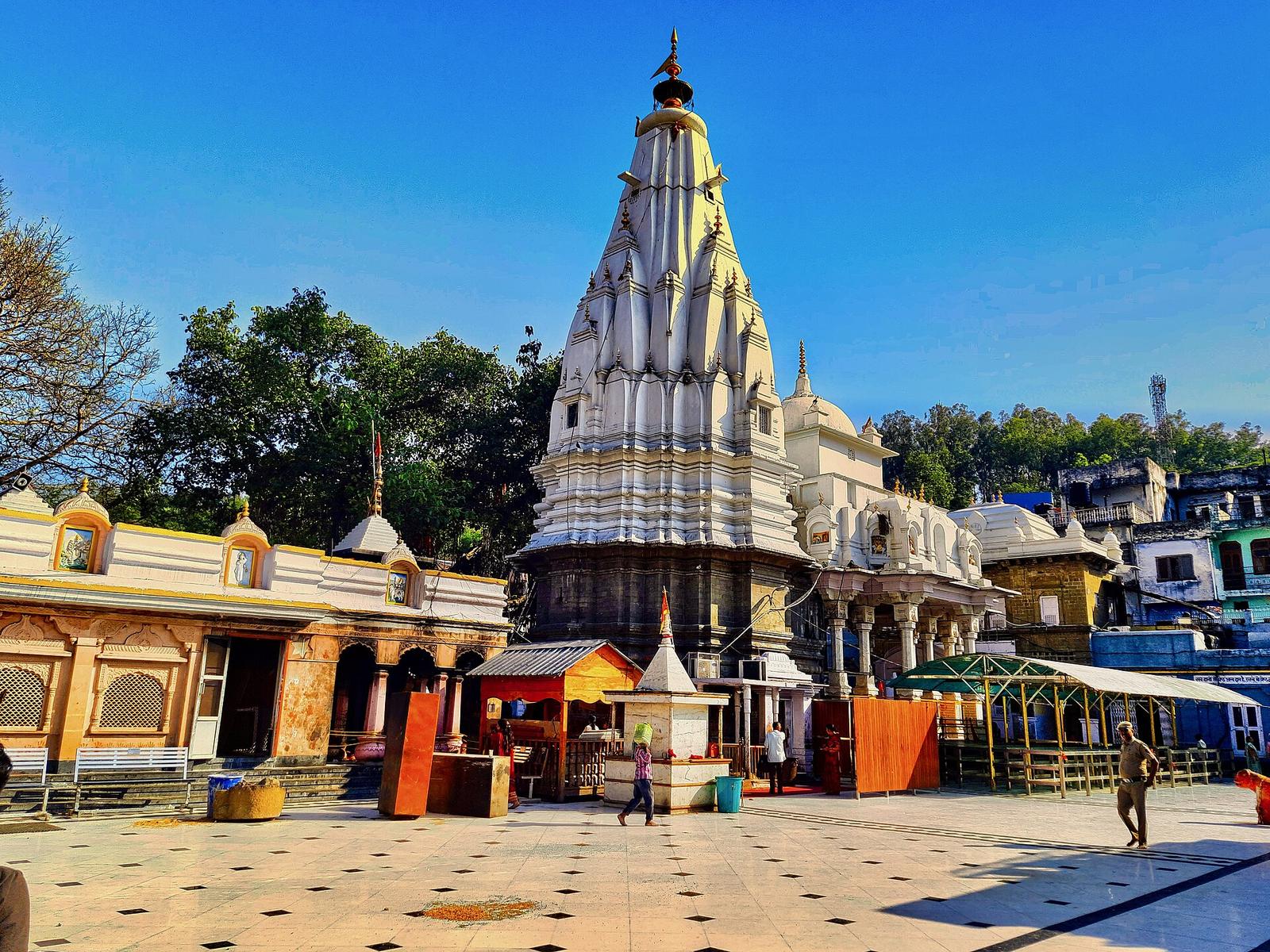
Brajeshwari Devi temple is in the old bazaar of Kangra town, about 3 km from the fort. The official Kangra temples portal lists it open 5 am to 9 pm in summer and 5:30 am to 8 pm in winter, closed 12 noon to 12:30 pm for bhog. The temple was destroyed in the 1905 earthquake and rebuilt in the 1930s (Wikipedia).
For a full plan, use our places to visit in Kangra guide and the five-day Kangra Valley itinerary.
Where should I stay to visit Kangra Fort?
Most visitors do the fort as a day trip from Dharamshala or McLeod Ganj, where the hotels and taxis are. Lower Dharamshala is closest and saves the 9 km road down from McLeod Ganj each way. Browse hotels in Dharamshala and McLeod Ganj or read where to stay in Dharamshala.
What is confirmed and what is not (27 October 2026)
| Detail | Status |
|---|---|
| Katoch fort, ASI protected, damaged in the 1905 earthquake | Confirmed (Kangra district website, Wikipedia) |
| On the draft 2026 list of ticketed ASI monuments, Category B | Confirmed (UNI, 9 September 2026) |
| Hours 6 am to 6 pm, ticket from ₹20 | Online ticket listing (organiser ASI); not found on an ASI page |
| Foreigner ticket price | Not confirmed |
| Audio guide price | Not confirmed |
| Museum ticket and hours today | Not confirmed (₹10 in 2010) |
| Bus timetable Dharamshala to Kangra | Not checked |
Frequently Asked Questions
What are the Kangra Fort timings?
What is the Kangra Fort ticket price?
How far is Kangra Fort from Dharamshala?
Who built Kangra Fort?
How much time do I need at Kangra Fort?
Can I reach Kangra Fort by toy train?
Is there a taxi tour from Dharamshala to Kangra Fort?
More answers on our Dharamshala travel Q&A page.
Where to stay: see our picks of the best hotels in Dharamshala and the best hotels in McLeod Ganj, or compare all hotels and homestays with direct rates.
Need Help Planning Your Dharamshala Trip?
Our local team can help with hotels, treks, taxis, and custom itineraries.
Sources
Checked 2026-10-27. Facts change; confirm on the official pages before you travel.
- Kangra Fort: history, ASI protection, how to reach (Kangra district administration, official; checked 27 October 2026)
- Kangra Fort: location, area, timeline from 1009 to the 1905 earthquake, gates and temples (Wikipedia; checked 27 October 2026)
- Kangra Fort: tickets and hours, organiser Archaeological Survey of India (District; checked 27 October 2026)
- Centre proposes revised list of ticketed ASI monuments: 30 in Category A, 136 in Category B (UNI, 9 September 2026)
- Archaeological Survey of India: entry ticket monuments and online ticketing
- Maharaja Sansar Chand Museum opens near Kangra Fort, owned by the royal family of Kangra (The Tribune, 21 November 2010)
- Dalai Lama inaugurates historic Indian museum (PTI via VOA Tibetan, April 2011)
- Kangra: Kangra Fort about 3 km from Kangra town (Himachal Pradesh Tourism)
- Vajreshvari (Brajeshwari) Devi temple: destroyed in 1905, rebuilt in the 1930s (Wikipedia)
- Bajreshwari Devi temple timings and aarti (Kangra temples portal, Government of Himachal Pradesh)
Related Guides
Places to Visit in Kangra (2026): Fort, Temples, Masroor and a 1-Day Loop
Kangra Fort, Brajeshwari Devi, the Masroor rock-cut temples, Chamunda, Jwalamukhi, Baijnath and Pong Dam, with distances from Dharamshala, timings, entry fees and a practical one-day Kangra loop.
Kangra Devi Temples & Shaktipeeth Yatra from Dharamshala (2026-27): Chamunda, Brajeshwari, Jwalamukhi, Chintpurni & Naina Devi
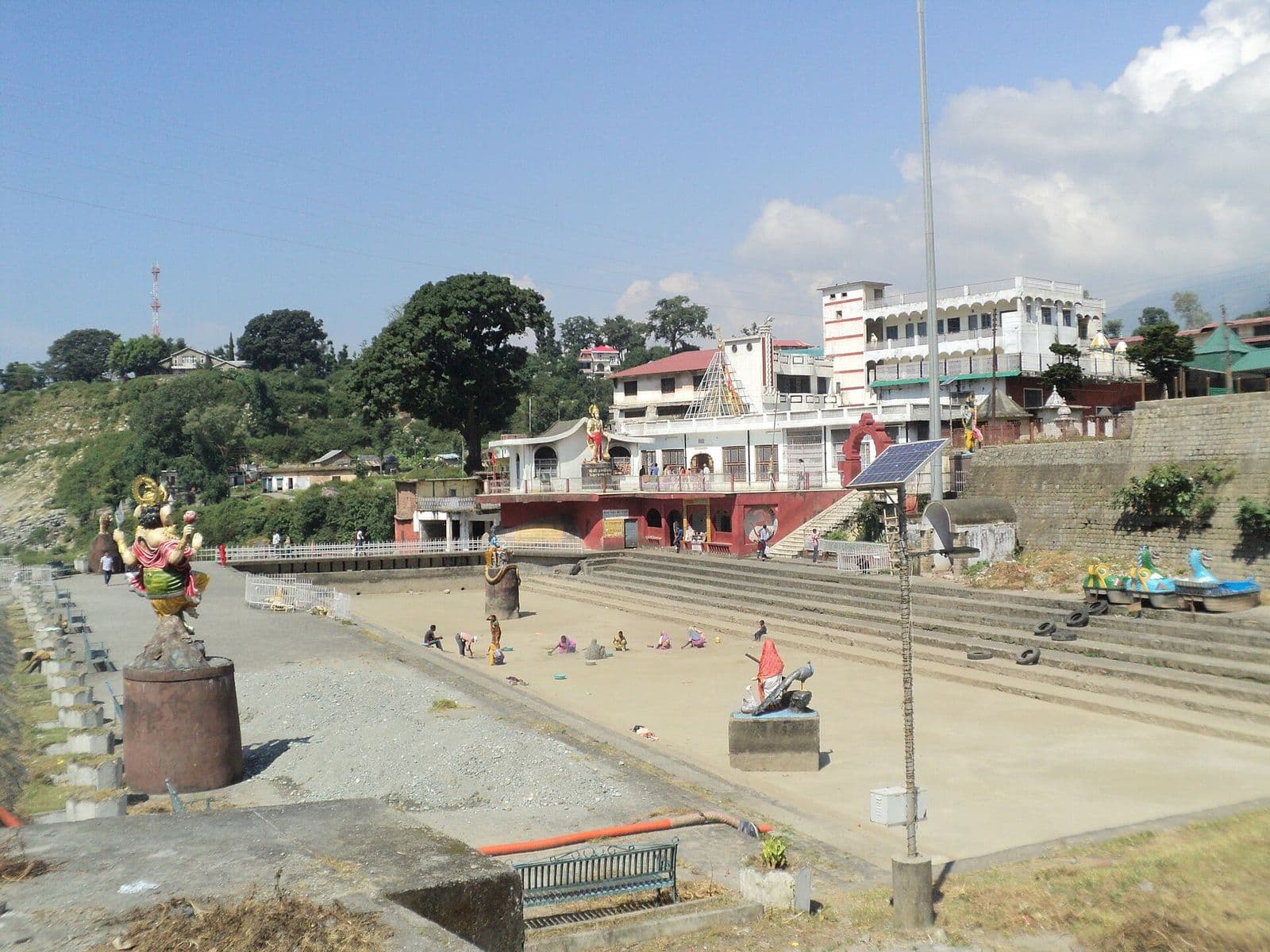
The definitive Shaktipeeth yatra from Dharamshala: Chamunda Devi, Brajeshwari (Kangra Devi), Kangra Fort and Jwalamukhi in one day, Chintpurni and Naina Devi on a second day. Temple-by-temple distances, darshan and aarti timings from official sources, dress and darshan-slip rules, crowd days, Navratri 2027 dates and our fixed ₹6,000 temple taxi.
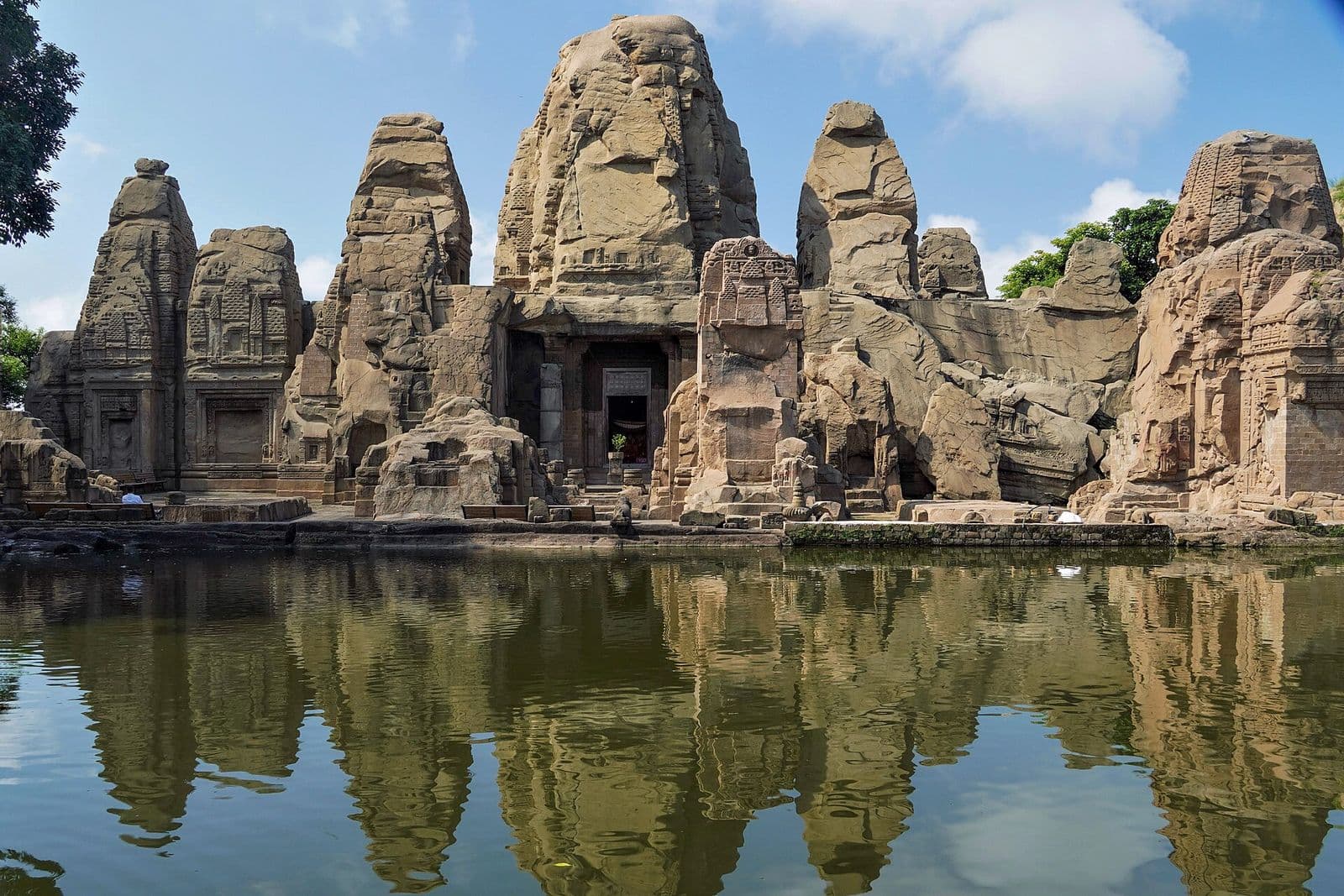
Masroor Rock Cut Temple 2026: Timings, Entry Fee, How to Reach from Dharamshala
The Masroor (Masrur) rock-cut temples are 8th-century monolithic Hindu temples carved from one sandstone ridge, about 40 to 45 km from Dharamshala in Kangra district. Timings, the ASI ticket, the reflecting tank, best light, how to reach by taxi, and how to combine Masroor with Kangra Fort and Pong Dam.
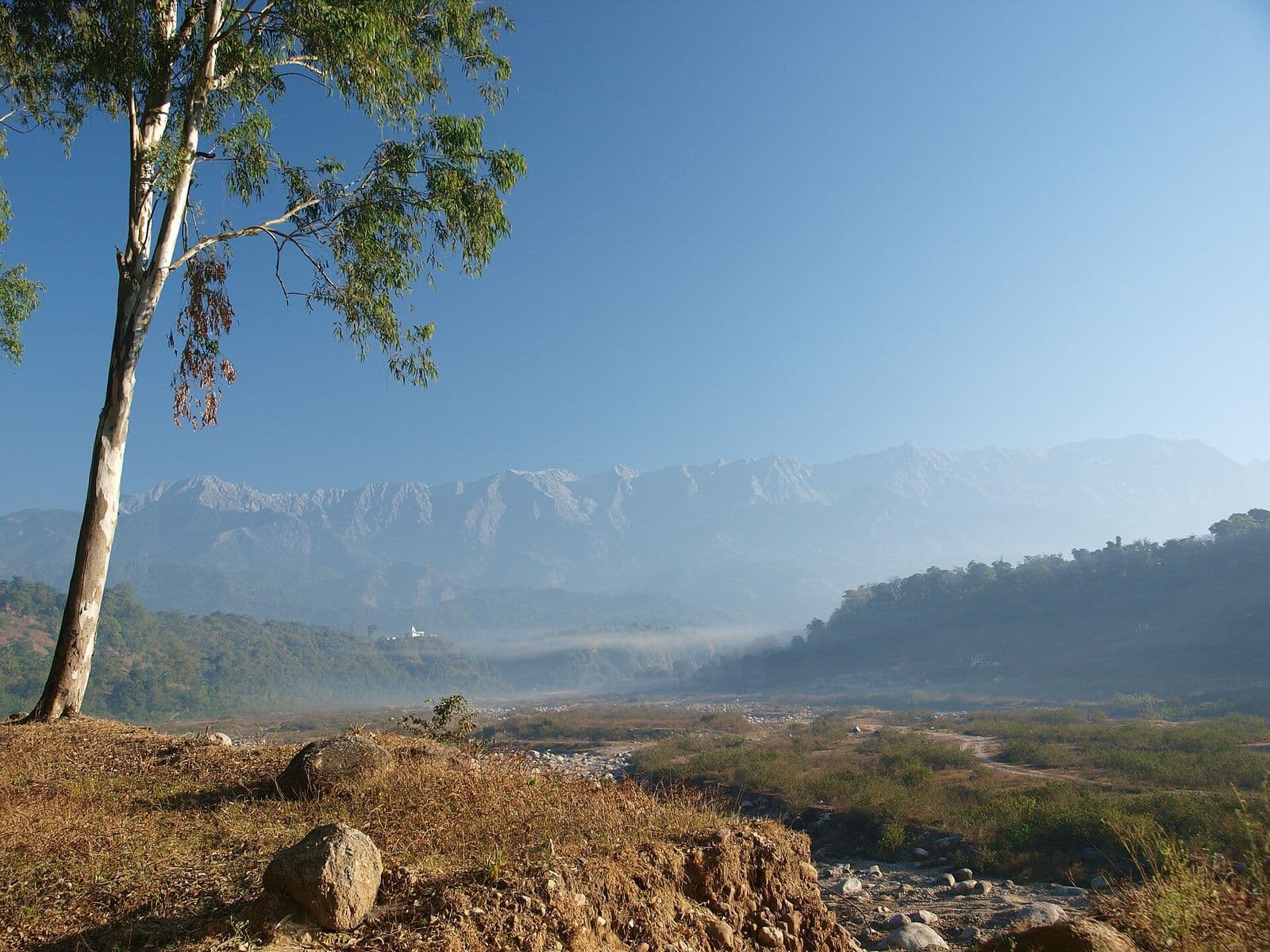
5-Day Kangra Valley Itinerary: McLeod Ganj, Triund, Kangra, Palampur and Bir (2026)
A practical five-day Kangra Valley itinerary covering McLeod Ganj, the Triund trek, Norbulingka, Kangra Fort and Masroor, Palampur and Baijnath, and Bir Billing, with driving times, where to base yourself and winter and monsoon variants.