Best Photography Spots and Sunset Points in Dharamshala (2026)
Where and when to shoot in Dharamshala and McLeod Ganj: the best sunrise, sunset and Dhauladhar viewpoints, timings by season, monastery photo etiquette, drone rules and dark-sky spots for astrophotography.
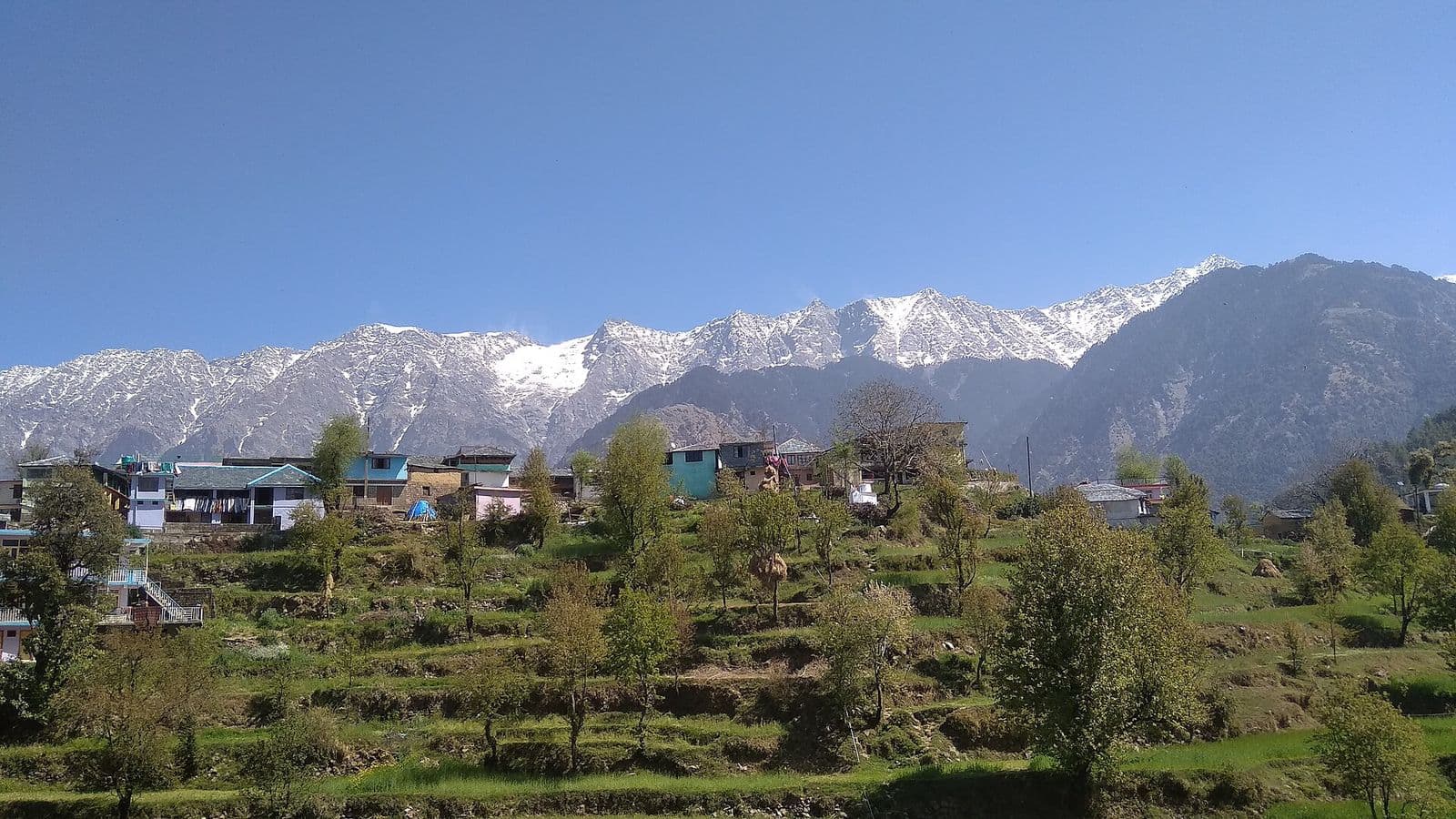
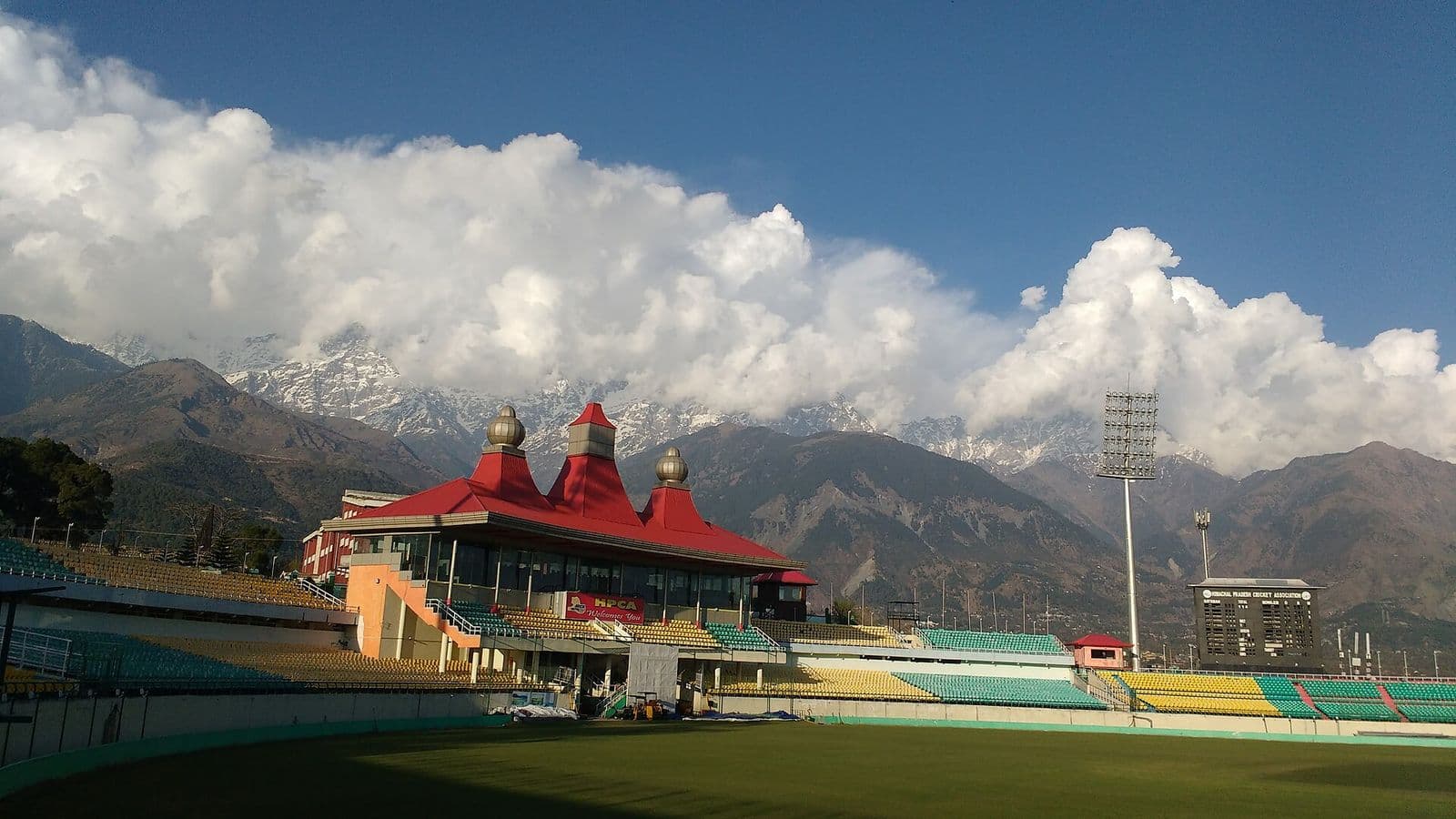
The best sunset point in Dharamshala is Naddi viewpoint, where the last light turns the Dhauladhar peaks pink and gold while the valley below goes blue. For sunrise, go to Triund (if you camp legally or start in the dark) or, closer to town, the upper lanes of Dharamkot. For the most iconic single frame, it is the HPCA cricket stadium with snow peaks behind the stands, shot in the morning on a clear winter or autumn day. Season matters more than gear here: October to February gives crisp, haze-free air, while summer brings dust and forest-fire haze and the monsoon hides the mountains for weeks.
Below is a local photographer's guide to the area: a ranked list of viewpoints with timings, how the light changes through the year, etiquette at monasteries and temples, the honest situation with drones, and where to go for the night sky. Times are approximate; check a sun-tracking app for your exact date.
Quick facts for photographers
| Fact | Detail |
|---|---|
| Direction of the mountains | The Dhauladhar runs along the north and north-east of town; the Kangra Valley opens to the south and west |
| What that means | Sunset and sunrise both light the peaks side-on; the valley glows towards the west at sunset |
| Sunrise (approx.) | around 5.30 am in June, 7.15 am in late December |
| Sunset (approx.) | around 7.30 pm in June, 5.30 pm in December |
| Clearest air | Mid-October to February, and the days right after rain at any season |
| Haziest | May to June (heat, dust, occasional forest fires) |
| Lowest visibility | July to mid-September (monsoon cloud) |
| Drone status | Regulated; registration for drones over 250 g, airspace limits near Gaggal airport, never over religious sites or the Dalai Lama's residence |
The light by season
| Season | Light | Best subjects | Tips |
|---|---|---|---|
| Spring (March to April) | Clear mornings, softer haze by afternoon | Rhododendrons on the Triund trail, snow still on peaks | Shoot early; afternoon clouds build |
| Summer (May to June) | Hazy, harsh midday sun | Festivals, street life, green forest | Use dawn and the hour after rain; avoid midday landscapes |
| Monsoon (July to mid-September) | Diffused, misty, dramatic | Waterfalls, mist in deodars, clouds rolling through lanes | Protect gear; the mountains appear for minutes at a time, so wait |
| Autumn (late September to November) | The clearest of the year | Big Dhauladhar panoramas, astrophotography | Best all-round photography season |
| Winter (December to February) | Low sun, crisp air, snowy peaks | Snow-capped range, the HPCA stadium, frost on the kora | Golden hour is long; carry warm gloves for night shoots |
A useful local trick: the clearest mountain views of the whole year often come the morning after a big storm. If you see heavy rain at night, set an alarm.
The best viewpoints, ranked
1. Naddi viewpoint (sunset and sunrise)
About 3 to 4 km from McLeod Ganj past Dal Lake. Naddi sits on a shoulder facing the Dhauladhar head-on, with a clean foreground of fields and village roofs. At sunset the snow takes on warm alpenglow for 10 to 20 minutes after the valley falls into shadow. Arrive 45 minutes early, and stay 20 minutes after sunset for the blue hour. A short telephoto (70 to 200 mm) isolates individual peaks and ridges beautifully.
Read more: Naddi and Dal Lake guide, Naddi destination page.
2. Triund ridge (sunrise, sunset and stars)
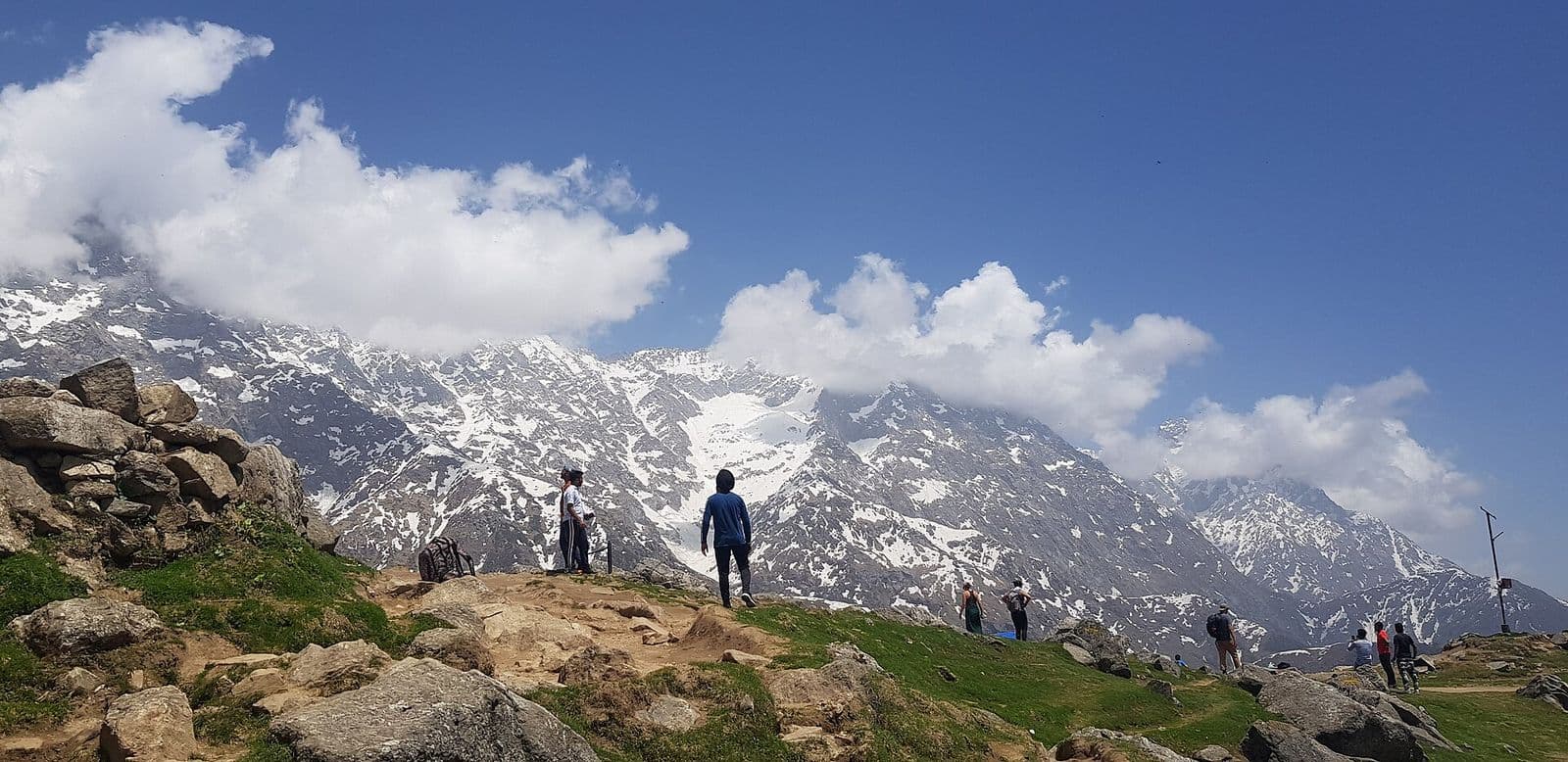
At about 2,850 m, Triund puts you face to face with the Dhauladhar, with the Kangra Valley falling away behind you. Sunrise lights the peaks from the east; sunset turns the valley side gold. Overnight tenting at Triund is controlled by the forest department with capped numbers and fees that change, so book through a registered operator or confirm rules at the Galu checkpost. A day hike starting in the dark also gives you sunrise light on the upper trail.
Read more: Triund trek complete guide, Triund camping guide, book the Triund trek.
3. HPCA cricket stadium (morning)
The famous frame: green outfield, colourful stands, and the snow wall of the Dhauladhar rising behind. Shoot in the morning when the light is on the mountains and the air is clear, ideally October to February. On match days access is ticketed; on other days, entry and access rules vary, so ask at the gate.
Read more: HPCA cricket stadium guide.
4. The kora and Tsuglagkhang (dawn, people)
Strings of prayer flags, rows of brass prayer wheels and Tibetan elders walking in the first light make the Lingkhor (kora) the best street and culture shoot in town. Go at dawn, move quietly, walk clockwise, and use a moderate lens rather than pushing a telephoto into faces. See the etiquette section below.
Read more: Dalai Lama Temple guide, Tibetan culture and etiquette.
5. Dharamkot and Galu Devi (sunrise, golden hour)
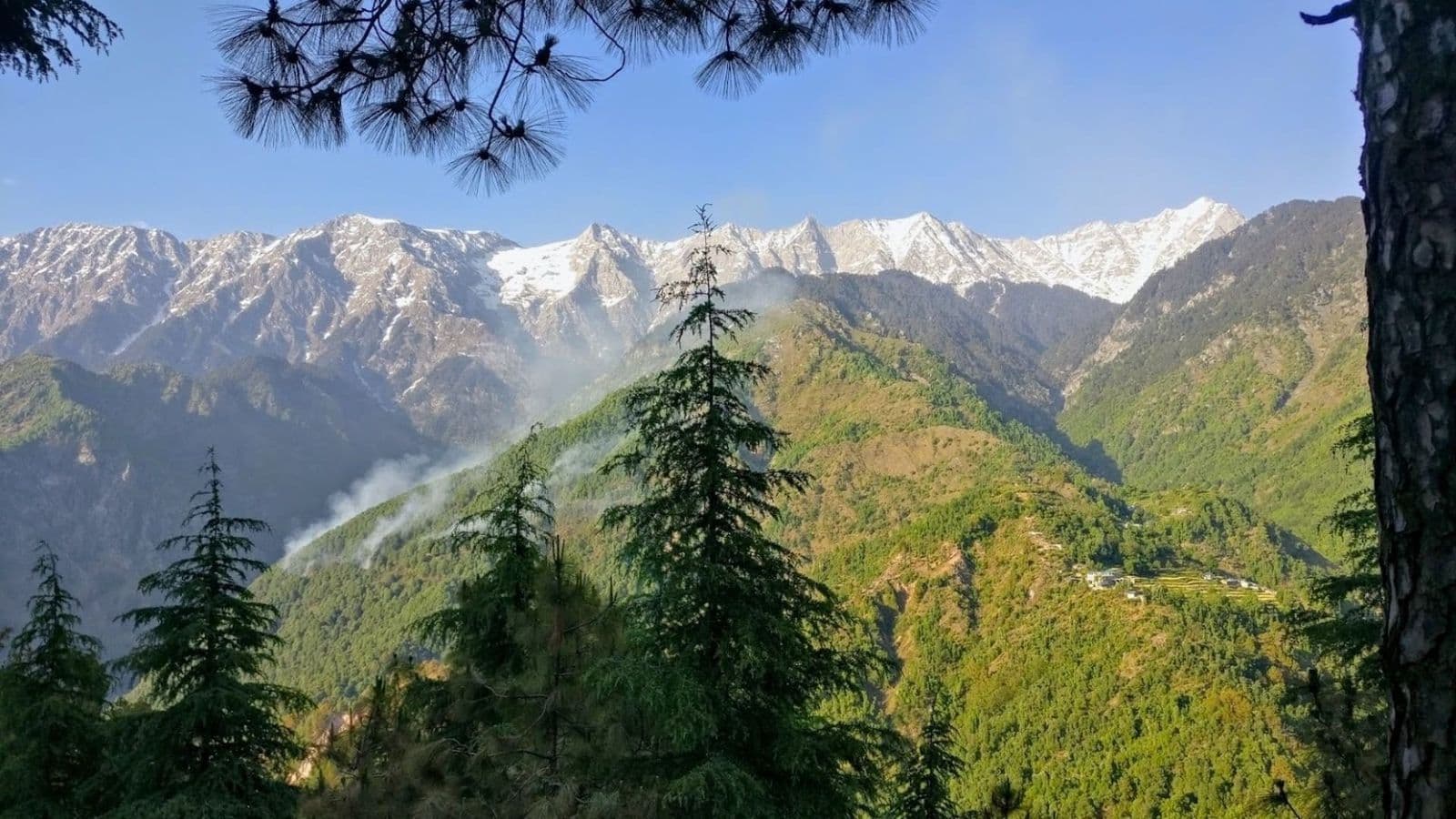
The upper lanes of Dharamkot look across to the Dhauladhar and down over the McLeod Ganj ridge. Galu Devi temple, above Dharamkot at the Triund trailhead, gives a wider view and is a good sunrise spot without a full trek.
Read more: Dharamkot travel guide.
6. Bhagsu waterfall (morning, monsoon)
Shoot early on weekdays before the crowds. In monsoon the falls are at their most powerful, but the path can be slippery and the area wet; use a polariser and a slow shutter, and keep well back from the edge.
Read more: Bhagsu travel guide.
7. St. John in the Wilderness (morning, forest light)
The stone church framed by tall deodars is lovely when light filters through the trees in the morning. Respect services and the graveyard.
8. Snowline and Laka Glacier (mountain drama)
For close-up peaks, rock and snowfields, continue beyond Triund towards Snowline and the Laka Glacier. This is a serious hike; go with a guide outside summer and autumn.
Read more: Snowline and Laka Glacier trek.
9. Kareri Lake (reflections, stars)
A high, quiet lake at about 2,934 m, with far fewer people and very dark skies. Calm early mornings can give reflections.
Read more: Kareri Lake trek guide, book the Kareri Lake trek.
10. In the valley: Masroor, Kangra Fort, tea gardens, Bir
- Masroor rock-cut temples: late afternoon light on the carved sandstone, with the temple reflected in the tank on a still day.
- Kangra Fort: the ramparts above the river gorge; best in the afternoon.
- Palampur tea gardens: early morning mist and neat rows of tea with the Dhauladhar behind.
- Bir landing site: sunset with dozens of paragliders spiralling down in season.
- Pong Dam: winter birdlife at dawn; bring a long lens.
Read more: Places to visit in Kangra, Palampur travel guide, Bir Billing paragliding, Pong Dam bird sanctuary.
Summary table
| Spot | Best time of day | Best season | Distance from McLeod Ganj (approx.) | Effort |
|---|---|---|---|---|
| Naddi viewpoint | Sunset | Oct to Feb | 3 to 4 km | Easy (road) |
| Triund | Sunrise and sunset | Oct to Nov, Mar to Apr | 9 km trek | Moderate |
| HPCA stadium | Morning | Oct to Feb | 9 to 10 km | Easy |
| Kora / Tsuglagkhang | Dawn | Any | 800 m | Easy |
| Dharamkot / Galu Devi | Sunrise | Oct to Apr | 3 to 5 km | Easy to moderate |
| Bhagsu waterfall | Morning | Monsoon end, Sept to Oct | 2 to 3 km | Easy |
| St. John's church | Morning | Any | 2 km | Easy |
| Snowline / Laka | Midday light on peaks | May to June, Oct | 11 to 12 km trek | Hard |
| Masroor | Late afternoon | Oct to Mar | 40 to 45 km | Easy (taxi) |
| Palampur tea gardens | Early morning | Mar to May, Sep to Nov | 35 to 40 km | Easy (taxi) |
| Bir landing site | Sunset | Oct to Nov, Mar to May | 65 to 70 km | Easy (taxi) |
For valley spots, it is far easier to hire a taxi with a driver who knows where to wait; see our taxi service.
Monastery and temple photo etiquette
People here are generally patient with cameras, but a few rules keep it that way.
- No photography inside most shrine halls, including the main temple of the Tsuglagkhang. Look for signs; when in doubt, put the camera away.
- Ask before photographing monks, nuns and elderly Tibetans, especially close-ups. A smile and a gesture at the camera is usually enough; accept a no gracefully.
- Debating monks in the courtyard are often photographed from a respectful distance. Do not walk into the middle of a debate, and do not use flash.
- During teachings and ceremonies, phones and cameras are usually restricted by security. Follow instructions.
- Never photograph people in prayer or prostration from close range or with flash.
- Walk clockwise on the kora and around stupas, even when chasing a shot.
- Do not climb on walls, stupas or chortens for a better angle.
- Hindu temples such as Bhagsunag and Chamunda: photography is often limited in the sanctum. Check locally.
Read more: Rules, permits, dos and don'ts.
Drone rules: the honest version
India regulates drones under the Drone Rules, 2021. The broad picture, which you should confirm on the official Digital Sky platform before flying:
- Registration: drones above nano class (over 250 g) need a Unique Identification Number, and commercial or larger drones may need a remote pilot certificate.
- Airspace zones: the Digital Sky airspace map shows green, yellow and red zones. Airspace around airports, including Kangra (Gaggal) airport, has restrictions, and parts of the Dharamshala area may fall into controlled zones. Check the map for your exact location.
- Sensitive sites: do not fly over the Tsuglagkhang complex, the Dalai Lama's residence, monasteries, army areas around the cantonment, government buildings or crowds. Security staff and police can and do stop drone flights.
- Treks and forests: forest areas may have their own restrictions; ask the forest department or your trek operator.
- Foreigners: importing and flying drones as a foreign tourist is significantly more restricted; do not assume you can fly.
Our advice: if you are not certain your flight is legal at that spot, do not launch. Many of the best frames here (Naddi, Triund, the stadium) work beautifully from the ground.
Astrophotography spots
Light pollution from Dharamshala and the Kangra Valley spreads to the south and west, so the best night shots point north towards the mountains, which are dark.
| Spot | Darkness | Notes |
|---|---|---|
| Triund | Good towards the north | Valley lights visible to the south; legal camping needed for night shoots |
| Snowline / Laka | Very good | Cold and exposed; guided overnight only |
| Kareri Lake | Very good | Remote, few people, still water |
| Upper Dharamkot / Galu Devi | Moderate | Easy access, some village light |
| Naddi | Moderate | Good for star trails over peaks, some light from hotels |
| Bir and Rajgundha | Good to very good | Rajgundha is remote and dark |
Planning tips:
- Shoot around the new moon. A bright moon washes out stars but lights the snow, which can be beautiful in its own way.
- October and November give the most reliable clear nights; winter is clearer still but very cold at altitude.
- The Milky Way core is low in the south-western evening sky in early autumn, which means it sits above the brighter valley side. For mountain-and-stars frames, star trails over the Dhauladhar often work better than core shots.
- Bring spare batteries (cold drains them fast), a headlamp with a red mode, and warm layers. At Triund, night temperatures can drop near freezing well outside winter.
Gear and practical tips
- Lenses: a wide (16 to 24 mm) for panoramas and stars, a standard zoom for streets, and a 70 to 200 mm for compressing peaks.
- Polariser: useful for waterfalls and cutting haze; less useful at wide angles in the sky.
- Rain cover: essential from late June to September.
- Tripod: light carbon if trekking.
- Charging: power cuts happen in villages and there is no power at Triund; carry power banks.
- Where to stay: Naddi or Dharamkot put you closest to the best light; see our hotels page, the McLeod Ganj guide, and the weather and packing guide. Questions? Try our FAQ.
Frequently Asked Questions
Which is the best sunset point in Dharamshala?
When is the clearest weather for mountain photos in Dharamshala?
Can I take photos inside the Dalai Lama Temple?
Can I fly a drone in McLeod Ganj?
Where can I photograph the Milky Way near Dharamshala?
More answers on our Dharamshala travel Q&A page.
Need Help Planning Your Dharamshala Trip?
Our local team can help with hotels, treks, taxis, and custom itineraries.
Related Guides
Naddi & Dal Lake Guide 2026: Sunrise Point, Tota Rani, St. John Church & Stays
An honest guide to Naddi and Dal Lake above Dharamshala: the Naddi viewpoint at sunrise and sunset, the real state of Dal Lake, Tota Rani village, the St. John in the Wilderness walk, Kunal Pathri and where to stay.
Triund Trek: The Complete Guide for 2026
Everything you need for Triund -- route details, permits, camping tips, packing list, and insider advice from local guides.
HPCA Stadium Dharamshala Guide 2026: Visiting, Match Tickets & Entry Rules
How to visit the HPCA Cricket Stadium in Dharamshala on non-match days, how to get tickets and what to carry on match days, parking and traffic, the ground's history and the nearby War Memorial.
Dharamkot Travel Guide 2026: Upper vs Lower, Tushita, Gallu Devi & Where to Stay
A local's guide to Dharamkot above McLeod Ganj: Upper vs Lower Dharamkot, Tushita and Dhamma Sikhara, the Gallu Devi start of the Triund trek, cafes, hostels, the Israeli backpacker scene and how to find the quiet side.